Background-free imaging, via DSP
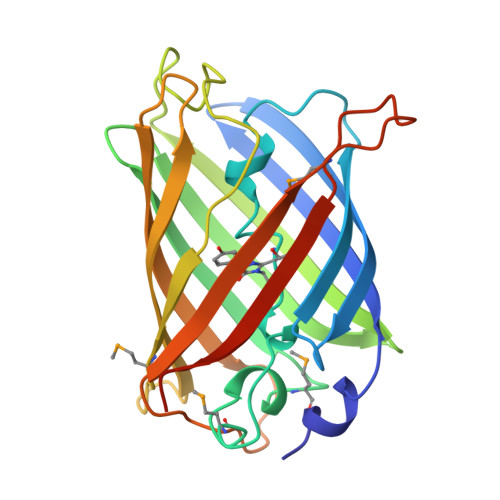
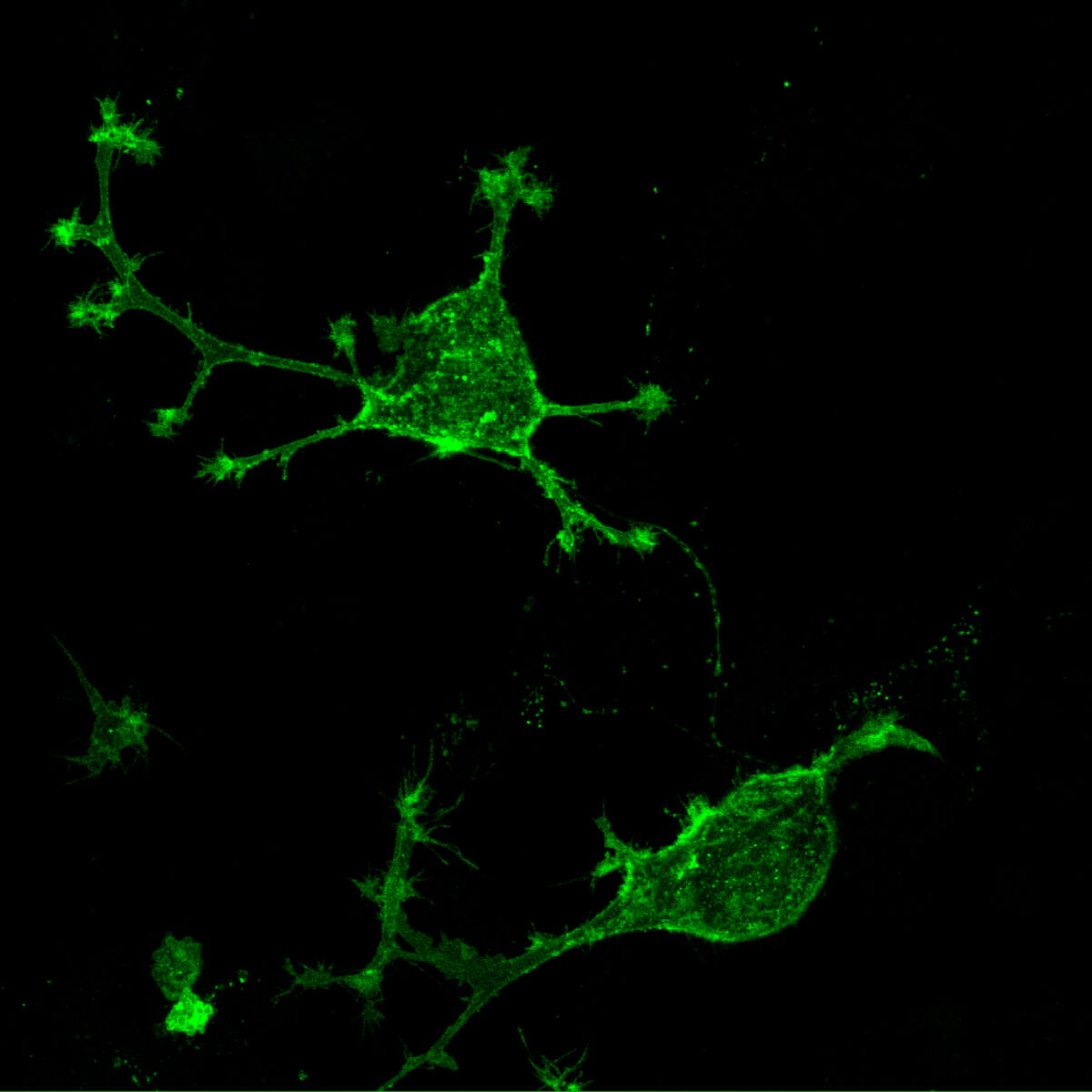
OMFPs — a novel class of fluorescent proteins uncovered by our team — hold the potential to revolutionize live-cell fluorescence imaging. Experimental data from diverse sources were systematically interconnected, and pivotal insights extracted from a sea of background noise.
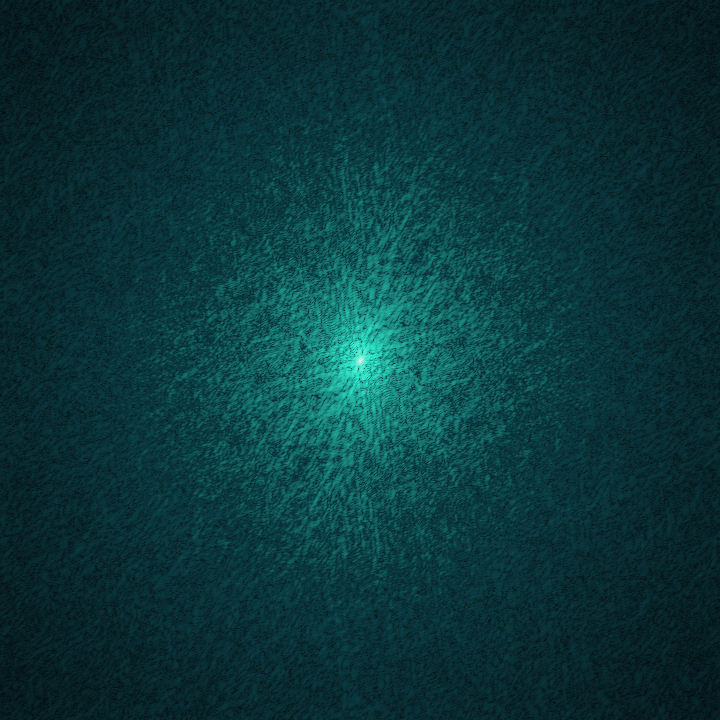
Absolute reference-free and background-free cellular images were achieved by applying mathematical transformations — the fast Fourier transform — to time-series cellular fluorescence data, using bespoke algorithms in Python, Matlab, and Mathematica.
Engineering the proteins
Fluorescence intensity of OMFPs is precisely modulated via co-illumination with photons more red-shifted than the emission itself. New OMFPs are engineered through site-directed mutagenesis, drawing on intramolecular interactions between the chromophore and its environment via computer-assisted 3D modeling.
Simulating the photophysics
Optical modulation and delayed fluorescence are modeled with multi-state rate matrices analogous to Jablonski diagrams — determining photophysical parameters previously too complex to assess. The simulation stack: NumPy and Pandas for computation, SciPy for optimization, Matplotlib for visualization, in an object-oriented paradigm.